Archive:
December 13, 2011: ATLAS experiment presents latest Higgs search status.
December 13, 2011: NASA's Fermi Shows that Tycho's Star Shines in Gamma Rays.
December 2011: ATLAS on the cover of the December Issue of the CERN Courier for the article, "Two years of LHC physics: ATLAS takes stock"!
November 15, 2011: Michael Dine, SCIPP Member and distinguished professor and chair of physics at UC Santa Cruz, has received the 2010-11 Outstanding Faculty Award from the Division of Physical and Biological Sciences!
November 3, 2011: SCIPP Members Robert Johnson, Bill Atwood, Pablo Saz-Parkinson and others at UCSC are noted in a UCSC Press Release regarding contributions to Fermi findings.
November 2011: ATLAS diphoton+MET search (a signature of gauge-mediated SUSY breaking or of universal extra dimensions) on the cover of this week's EPJC!
October 28, 2011: SCIPP Members Jason Nielsen and Sofia Chouridou noted in CERN Courier article listing results from ATLAS group!
October 11, 2011: SCIPP Member William Atwood has been awarded the 2012 Panofsky Prize in Experimental Particle Physics! (UCSC Press release)
October 6, 2011: SCIPP Members Nepomuk Otte and David Williams, noted in UCSC Press Release about the new findings from VERITAS Collaboration that challenge theoretical models of pulsar emission. (Science link) (UCSC Press Release)
September 29, 2011: SCIPP Member Joel Primack is one of the authors of the recently announced three "Bolshoi" Supercomputer Simulations of the Evolution of the Universe. (UC-HiPACC Press Release) (UCSC Press Release)
September 27, 2011: SCIPP Member William Atwood has been awarded the 2012 Panofsky Prize in Experimental Particle Physics!
September 27, 2011: SCIPP Member Enrico Ramirez-Ruiz featured profile - UC wide Research
August 29, 2011: Astrophysicists report first simulation to create a Milky Way-like galaxy. Supercomputer experiment supports cosmological model of a "cold dark matter" universe. UCSC astrophysicist and SCIPP Member, Piero Madau, coauthor of the paper accepted for publication in the Astrophysical Journal, was quoted in the UCSC Article.("Forming Realistic Late-Type Spirals in a LCDM Universe: The Eris Simulation" http://arxiv.org/abs/1103.6030)
August 24, 2011: SCIPP physicists working on the ATLAS experiment at the Large Hadron Collider(LHC) have made the first measurement ever of the ratio of W boson and Z boson production in association with hadronic jets(ATLAS at CERN Article)! The results were presented by Sofia Chouridou at the PANIC11 conference and are available at: http://arxiv.org/abs/1108.4908.
July 2011: Supersymmetry hunters from the SCIPP group working on the ATLAS experiment at the Large Hadron Collider(LHC) have reported first results from a search for new particles from gauge-mediated SUSYbreaking in a diphoton + missing energy signature. The results are available at: http://arxiv.org/abs/1107.0561.
July 12, 2011: Fermi LAT Second Catalog Released.: SCIPP Director quoted in BBC News article
June 29, 2011: At UCSC on July 6-8, we will have an in-depth review and planning meeting for R&D in the U.S. aimed at upgrades to the ATLAS detector now collecting data at the Large Hadron Collider(LHC) in Geneva, Switzerland. The upgrades aim at improving the capabilities of the detector in the search for new physics at the LHC. Approximately 25 physicists will be participating.
May 17, 2011: SCIPP Director Steve Ritz and others discuss the recent Fermi Symposium with the BBC
May 12, 2011: SCIPP researchers apply particle physics expertise to cancer therapy: NIH grant supports work on proton computed tomography to guide proton therapy for cancer treatment. (UCSC Article)
April 27, 2011: New book by Nancy Abrams and Joel Primack finds meaning in the cosmos.(Santa Cruz Weekly Cover Story) (UCSC Article)
April 19, 2011: SCIPP Member, Thomas Banks, elected to the American Academy of Arts and Sciences. (UCSC Article)
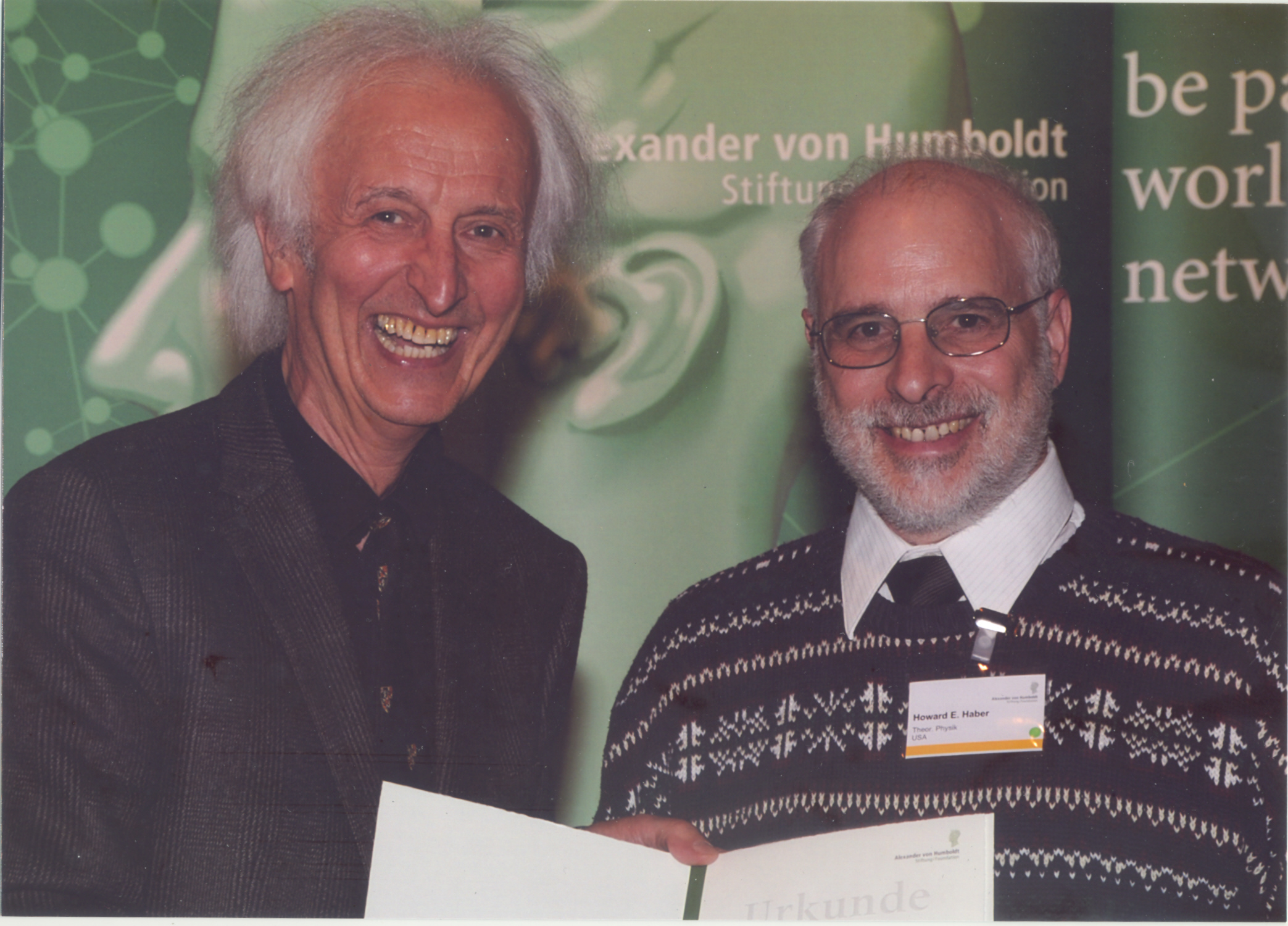
April 8, 2011: SCIPP Member, Howard Haber, receives Alexander von Humboldt Award during winners' symposium held in Bamberg, Germany. The award ceremony took place on Friday March 25. Award presented by Helmut Schwarz, Board of Trustees President of the Alexander von Humboldt Foundation.
April 5, 2011: SCIPP Seminar with Amy Furniss, "VERITAS Very High Energy Gamma-ray Observations of Galaxies", 10:30am in ISB 102. (Complete SCIPP Seminar Schedule)
March 29, 2011: SCIPP Member, Enrico Ramirez-Ruiz, honored for his achievements by the Division of Physical and Biological Sciences at the Science and Engineering Library's, Honored Faculty/Honored Books Exhibit, April 7 - May 6, 2011.
March 29, 2011: SCIPP Seminar today with UCO/Lick Observatory's Fulai Guo, "Fermi Bubbles: the Origin and Implications", 10:30am in 102 ISB. (Complete SCIPP Seminar Schedule)
January 21, 2011: SCIPP Member and UCSC physicist, Bill Atwood, shares Rossi Prize for work on gamma-ray telescope!
December 5, 2010: SCIPP Member, Abraham Seiden was interviewed by the Santa Cruz Sentinel in an article titled, "UCSC coordinating upgrade to Large Hadron Collider: $3.5 million grant funds new detector"
November 2010: SCIPP Neurobiology project article in the CERN Bulletin, "Retina neural circuitry seen with particle detector technology"
November 18, 2010: World's most precise new measurement of the top Quark Mass...
November 10, 2010: Check out the NASA Feature, "NASA's Fermi Telescope Finds Giant Structure in our Galaxy!"
November 10, 2010: Fermi featured in New York Times article!
November 10, 2010: Astronomy Picture of the Day features Fermi results!
November 9, 2010: SCIPP Member, Bruce Schumm, to be featured on KUSP "7th Avenue Project" again this Sunday, November 14, from noon-1pm!
November 9, 2010: SCIPP Member, Enrico Ramirez-Ruiz, named to Mexican Academy of Sciences!
November 8, 2010: SCIPP Member, Abraham Seiden, quoted in UCSC News about the newly awarded NSF-MRI grant which will support work on ATLAS at the LHC. SCIPP-UCSC is the lead Institution for this multi-institute award. The full UCSC article is titled "UCSC leads work on first major upgrade for LHC".
November 5, 2010: SCIPP Member, Bruce Schumm, to be featured on KUSP "7th Avenue Project" show this Sunday, November 7, from noon-1pm!
November 1, 2010: Record luminosity for LHC!
October 11, 2010: Researchers use hi-res detector to map neural circuits of the retina. SCIPP Member's, Alan Litke, Sasha Sher, Debbie Gunning and Keith Mathiesion, are co-authors in a paper published in Nature.
September 28, 2010: UC Santa Cruz doctoral programs earn high marks in national review
September 1, 2010: SCIPP Member Stefano Profumo featured in New Scientist!
August 12, 2010: Fermi Detects 'Shocking' Surprise from Supernova's Little Cousin
August 6, 2010: Astro2010 `Decadal Survey' report will be made public on Friday, August 13. There will be a webcast of the rollout event starting at 8AM in ISB 102. SCIPP Director, Steven Ritz, is a member of the Astro2010 Committee!
July 26, 2010: SCIPP Associate DIrector and Fermi LAT team member Robert Johnson quoted in recent BBC News story on Dark Matter.
June 30, 2010: Abraham Seiden stepping down after 30 years as Director of SCIPP!
SCIPP Members, Tom Banks, Michael Dine, and Subir Sachdev (Harvard) co-directors of the 2010 TASI summer school.
May 19, 2010: West Coast LHC Theory Meeting featured in UCSC News!
SCIPP will host the West Coast LHC Theory Meeting, Friday May 21, 2010!
April 20, 2010: SCIPP Member, Michael Dine, is among the newly elected fellows of the American Academy of Arts and Sciences, one of the nation's oldest and most prestigious honorary societies.
March 18, 2010: Fermi LAT Featured Again in Astronomy Picture of the Day (APOD)!
March 17, 2010: The first ATLAS physics paper,"Charged-particle multiplicities in pp interactions at sqrt(s) = 900 GeV measured with the ATLAS detector at the LHC" has been submitted to the archive (http://arxiv.org/abs/1003.3124v1) and to Phys. Lett. B.
March 8, 2010: Former SCIPP Graduate, PaulineGagnon, featured in Symmetry Magazine article, "Honoring Women in Particle Physics".
February 24, 2010: Fermi LAT all-sky image featured on the top American Physical Society website!
January 20, 2010: Astronomy Professor & SCIPP Member Enrico Ramirez-Ruiz featured in this week's
Good Times Santa Cruz. In the first awards ceremony of its kind, Santa Cruz NEXT honors 4 individuals for their standout creative efforts.
January 15, 2010: UCSC 5th Annual Conference for Undergraduate Women in Physics article in Santa Cruz Sentinel.
UCSC is hosting the 5th Annual Conference for Undergraduate Women in Physics, 15-17 January 2010. [Conference web site]
January 5, 2010: An international team including UCSC astrophysicist & SCIPP member, Piero Madau, has used highly sophisticated hydrodynamical simulations of dwarf galaxies to solve a long-standing discrepancy of the cold dark matter paradigm. The results will appear in the January 14th issue of Nature.
December 10, 2009: VERITAS Collaboration article from Nature.com, "A connection between star formation activity and cosmic rays in the starburst galaxy M82".
December 7, 2009: Article from the CERN Courier, "Protons are back in the LHC"
November 30, 2009: CERN Press Release, "LHC sets new world record"
November 23, 2009: CERN Press Release, "Two circulating beams bring first collisions in the LHC"
November 11, 2009: SCIPP Member Michael Dine is quoted in New Scientist, "In SUSY we trust: What the LHC is really looking for"
November 9, 2009: SCIPP Member Enrico Ramirez-Ruiz & UCSC astrophysicists have developed supercomputer simulations of colliding white dwarfs, providing a new path to detonate "standard candle" type Ia supernovae. A new study published this month in the Astrophysical Journal Letters and featured in a Scientific American article.
November 3, 2009: SCIPP Member Michael DIne to guest on NPR's, "On Point!"
"7.3 Billion Years Later, Einstein's Theory Prevails" A New York Times article on 29 October features a result from the Fermi Gamma-ray Space Telescope about interesting new limits on models of quantum gravity using faraway gamma-ray bursts. The results are published in Nature.
UCSC/SCIPP Associate Director Robert Johnson to give a talk on Fermi at the SFAA on 16 September 2009
September 15, 2009: SCIPP Member, UCSC physicist Anthony Aguirre highlighted in Discover and Astronomy magazine feature stories on the possibility that we inhabit just one of many 'universes' -- and that we might actually be able to detect the presence of others. (Discover online, November 4, 2009)
August 27, 2009: SCIPP Member, Enrico Ramirez-Ruiz, UCSC astrophysicist, has an article published this week in Nature discussing the origin of short gamma-ray bursts.
August 24, 2009: SCIPP Member Michael Riordan, elected to represent the Forum on the History of Physics(FHP) on the APS Council for a 4-year term as Forum Councilor beginning 1 January 2010.
August 2009: 30 Grads in 30 Days: Nina McCurdy
August 14, 2009: Fermi featured on the cover of SCIENCE Magazine and UCSC physicists and astronomers are coauthors of three major papers reporting scientific results from Fermi in this issue of the journal. ... (UCSC Story) (complete article)
August 5, 2009: SCIPP Member Enrico Ramirez-Ruiz established John Bachcall Award...
July 21, 2009: SCIPP Member Joel Primack: The new High Performance AstroComputing Center (HIPACC) will focus on computational astrophysics—using the growing power of supercomputers to address the most difficult problems in astrophysics and cosmology.
July 2, 2009: NASA's Fermi Telescope reveals a population of radio-quiet gamma-ray pulsars |


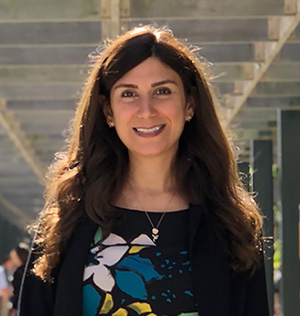

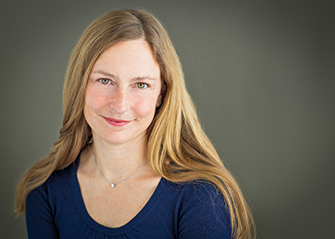
 April 9, 2021: SCIPP and Physics Graduate Student, Heather Mentzer, was just selected again to receive a Bruce Lane Memorial Scholarship. Congratulations Heather!
 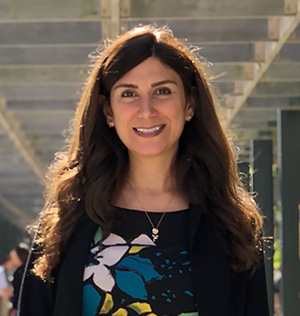 March 3, 2021: Shiva Abbaszadeh, SCIPP Member and assistant professor of electrical and computer engineering at UC Santa Cruz has been awarded the Tracy Lynn Faber Memorial Award from the Society of Nuclear Medicine and Molecular Imaging (SNMMI) for her outstanding contributions to high-resolution direct-conversion radiation detectors for medical imaging applications.
 January 15, 2021: Please join us in welcoming Professor Tesla Jeltema as the new SCIPP Associate Director!
 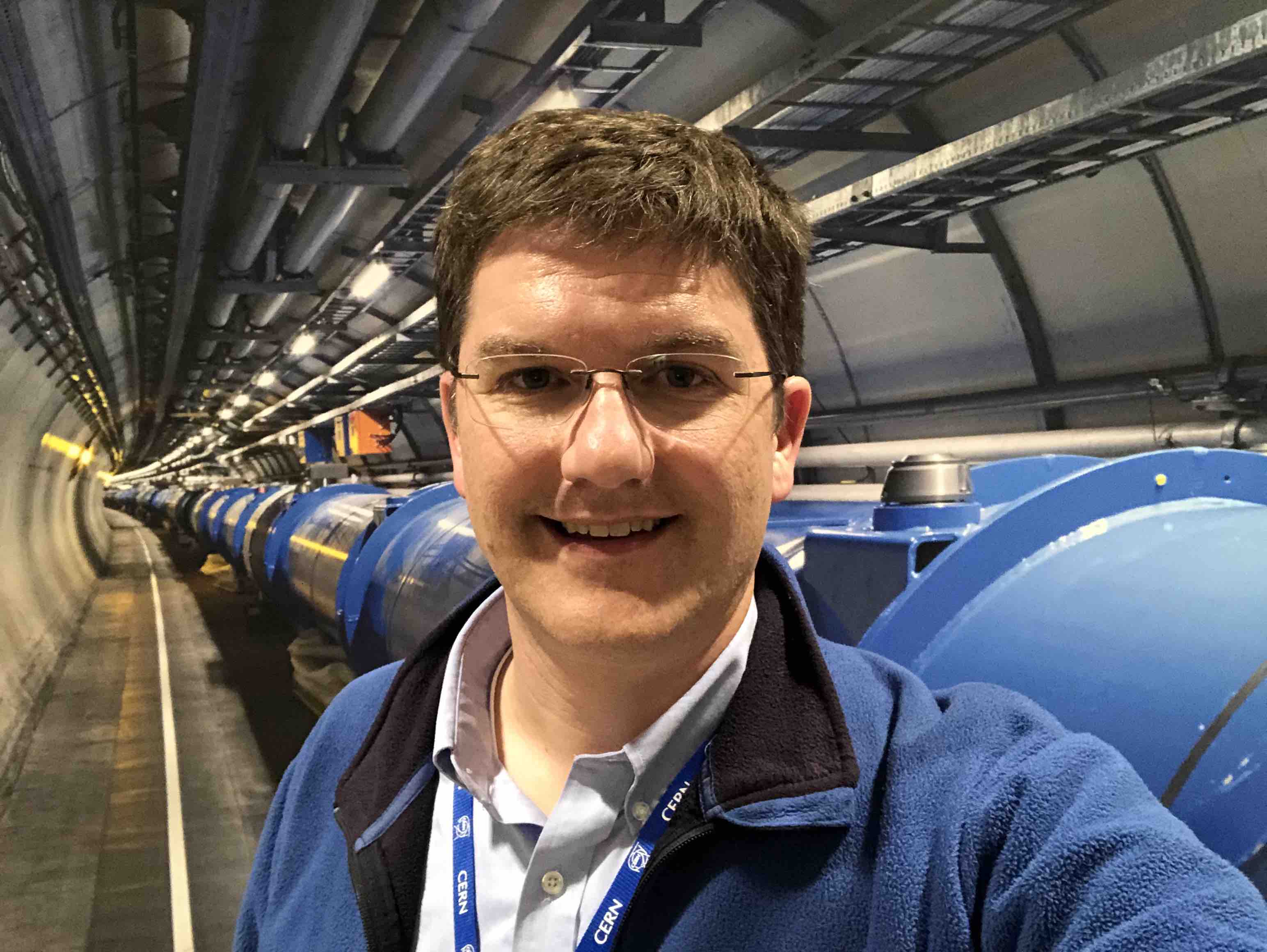 January 10, 2021: Please join us in welcoming Professor Jason Nielsen as the new SCIPP Director! Check out the Santa Cruz Sentinel article: "Santa Cruz Institute for Particle Physics undergoes leadership transition."
 January 8, 2021: SCIPP Member and Distinguished Professor of Physics, Steve Ritz, is this year’s winner of the division’s Outstanding Faculty Award. This award is the division’s highest honor for faculty achievement, recognizing combined excellence in research, teaching, and service. Congratulations Steve!
  December 1, 2020: New Higgs boson measurement from the ATLAS Collaboration at CERN. SCIPP members Carolyn Gee and Jason Nielsen contributed to the measurement of the Higgs boson decay to bottom quark pairs.
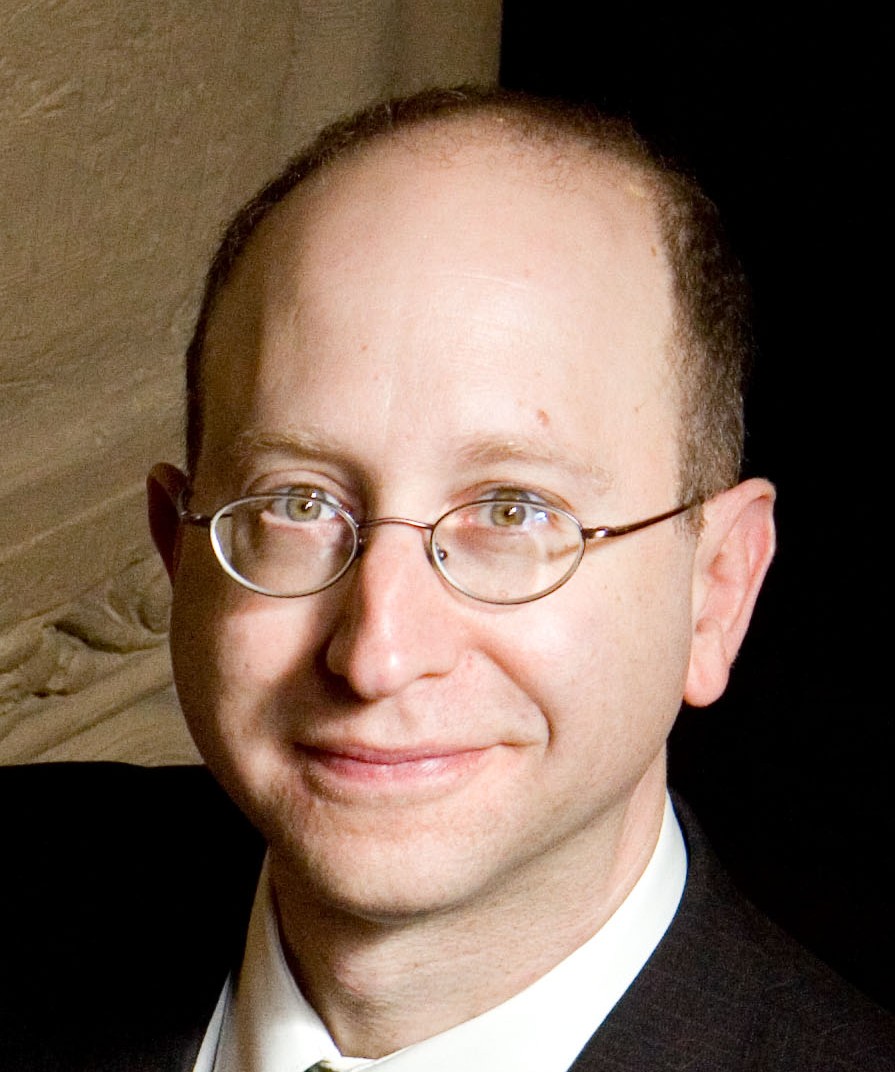 November 12, 2020: SCIPP Member, Physics Professor David M. Smith, elected as President-Elect of the Atmospheric and Space Electricity Section of the American Geophysical Union. Congratulations David!
 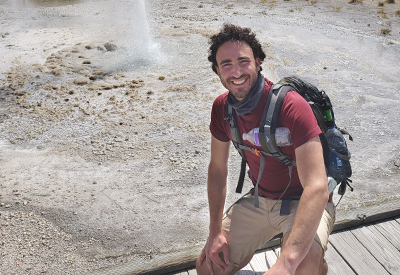 October 23, 2020: UCSC Scholar Profile for new SCIPP postdoctoral fellow, Jeff Dror!
  September 30, 2020: The Report of the Office of Science Workshop on Basic Research Needs for HEP Detector Research and Development is out, with contributions from multiple UC Santa Cruz SCIPPers.
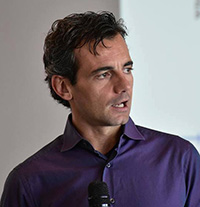 September 29, 2020: SCIPP Deputy Director for Theory, and Physics Professor, Stefano Profumo, has been elected a Fellow of the American Physical Society (APS) in recognition of his exceptional contributions to physics. Citation: For incisive contributions to the development of astroparticle physics. In particular, for work addressing many aspects of dark matter theory and detection, including direct and indirect detection, as well as collider searches. Congratulations Stefano!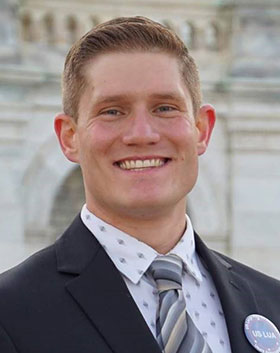
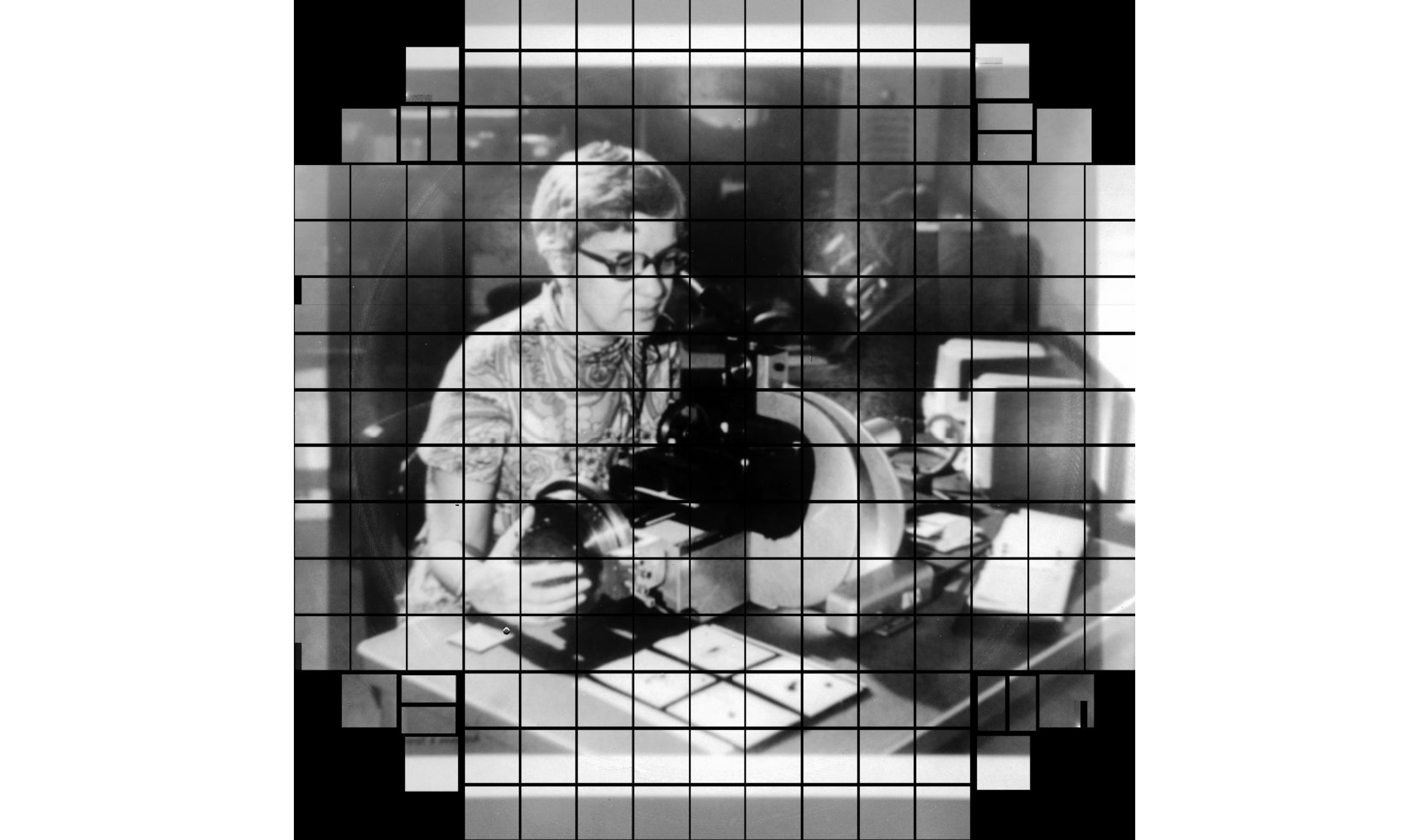 September 8, 2020: SCIPP Member, Steven Ritz, quoted in SLAC news article announcing the first images from the complete focal plane of the Rubin Observatory LSST Camera!
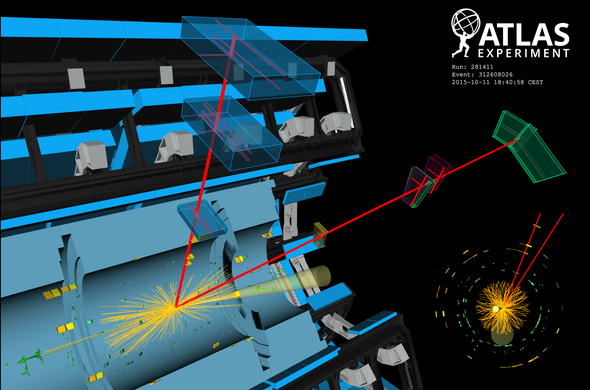 August 6, 2020: SCIPP Member, Stefania Gori was quoted in a Scientific American story about new findings from the Large Hadron Collider.
 June 1, 2020: SCIPP Member, David A. Williams, in UCSC news: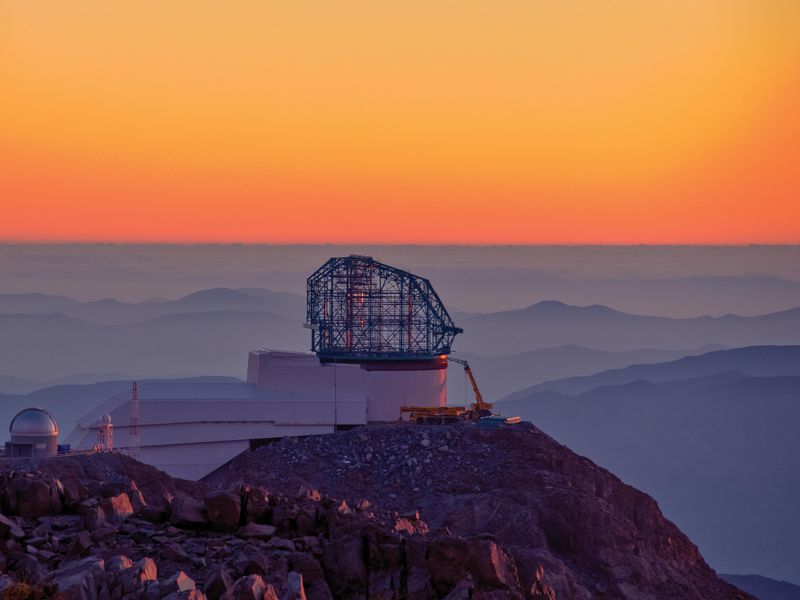
 February 21, 2020, Video: My Life as a Particle Physicist, in American Sign Language, by SCIPPer Giordon Stark!
 February 17, 2020: SCIPPer Giordon Stark was an Instructor at the recent IRIS-HEP analysis preservation boot camp!
 December 3, 2019: SCIPP Member Giordon Stark is featured in Symmetry Magazine! Check out the article: " A matter of interpretation".
  November 8, 2019: SCIPP Member and UC Santa Cruz Physics Professor David Smith is featured in the latest inquiry@UC Santa Cruz Research Magazine! Check out the full story,"Waiting with GODOT Studying the physics of lightning requires fortitude...and patience". By Anil Ananthaswamy.
 August 28, 2019: APS has just announced that SCIPP Member and UC Santa Cruz Physics Professor Joel Primack is the 2020 recipient of Julius Edgar Lilienfeld Prize! Congratulations Joel!
 July 17, 2019: Breakthrough Listen launches new optical search with VERITAS Telescope Array! SCIPP physicist David Williams will help lead effort using four 12-meter telescopes to search for nanosecond flashes of light from extraterrestrial civilization.
  June 9, 2019: SCIPP Members Prof. Robert Johnson and Grad Student Sarah Mechbal launched AESOP-Lite in May 2018. Just released is a short movie of Roger the Koala making his stratospheric journey in hopes of finding the ubiquitous cosmic rays. Music by SCIPP graduate student Sarah Mechbal, and her band Salmon Hammock.
  May 31, 2019: SCIPP member and Physics Professor Michael Dine joins panel on string theory at World Science Festival!
 May 1, 2019: SCIPP Graduate students Jacob Pasner and Duncan Wood joined a group of 68 Particle Physicists from collaborations across the United States to advocate to Congress for continued support of the field. The diverse group included representatives from the USLUA, SLAC and Fermilab and was able to contact all 538 offices of Congress to deliver the funding ask of the Particle Physics Project Prioritization Panel (P5).
 Congratualtions to SCIPP Grad Student, Ben Lehmann, for winning a place as one of the 10 finalists in the UCSC Grad Slam! Come support Ben at the UCSC Grad Slam which takes place on Friday, March 8, 5:30-8:00pm at the Kuumbwa Jazz Center.
  Friday, February 1, 2019: SCIPP Outreach in the QuarkNet Friday Flyer! Spotlight on the SCIPP University of California Santa Cruz QuarkNet Center SCIPP is the Santa Cruz Institute for Particle Physics, the particle physics research institute at the University of California, Santa Cruz. Their main work in QuarkNet in the past few years has been to run great ATLAS masterclasses. The "SCIPP center" is headed up by mentor Jason Nielsen and administrator Vicki Johnson. Teachers in the group participate in many ways, including those masterclasses. Last November, SCIPP center teacher Jonathan Rockman lead his students in World Wide Data Day.
 SCIPP Member, Jacob Pasner, in Symmetry Magazine: The farmer physicist: A graduate student looks for belonging inside and outside academia, 01/22/19 By Sarah Charley.
 SCIPP Member, David A. Williams, in the UCSC News: Scientists to inaugurate a new type of gamma ray telescope at Whipple Observatory The prototype Schwarzschild-Couder Telescope (pSCT) is designed as a pathfinder telescope for the Cherenkov Telescope Array.
 Congratulations to SCIPP Grad Student, Jacob Pasner, for his winning lightning round talk at this year's USLUA meeting! A brief statement from Jacob: I'm very excited for the opportunity to represent SCIPP and ATLAS this coming March as a particle physics advocate to US congress representatives. I'd like to thank the USLUA for offering me this opportunity, my advisor Dr. Jason Nielsen for his continuing support and Dr. Giordon Stark for nominating me to give this Lightning Round Talk.
 October 19, 2018: SCIPP Member, Giordon Stark, was quoted in a recent write-up about CERN!
 September 17, 2018: SCIPP Member and UCSC Physics Professor, Howard E. Haber, APS Physics Viewpoint: Higgs Decay into Bottom Quarks Seen at Last. Two CERN experiments have observed the most probable decay channel of the Higgs boson—a milestone in the pursuit to confirm whether this remarkable particle behaves as physicists expect.
 July 12, 2018: David Williams, SCIPP Member, adjunct professor of physics at UC Santa Cruz, and a member of the VERITAS collaboration, quoted in UCSC news story: "VERITAS supplies critical piece to neutrino discovery puzzle Potential connection between blazar and neutrino detection by IceCube observatory marks a new advance in multi-messenger astrophysics".
  June 11, 2018: Perspectives on 10 Years of Discovery with Fermi: By capturing the most energetic light in the sky, the spacecraft continues to teach us about the mysteries of the universe. By Peter Michelson, and SCIPP Members, William Atwood and Steven Ritz.
 June 8, 2018: Today's Astronomy Picture of the Day is the Fermi Science Playoffs image, in honor of Fermi's upcoming 10-year launch Anniversary, next Monday, June 11, 2018! Fermi Science Playoffs Image Credit: NASA, DOE, International Fermi LAT Collaboration, Jay Friedlander (Goddard Spaceflight Center)
  May 21, 2018: SCIPP Member, Professor David Smith, and SCIPP alumni graduate students, Dr. Greg Bowers and Dr. Nicole Kelly, in the UCSC News with ADELE, "Lightning in the eyewall of a hurricane beamed antimatter toward the ground". !
 SCIPP Graduate Student Christian Johnson was a panelist, with other astrophysics luminaries, at the recent Silicon Valley Comic Con!

 February 21, 2018: SCIPP/Physics Graduate Student, Christian Johnson, quoted in the UCSC News about the recent paper, Novel search strategy advances the hunt for primordial black holes.
 February 15, 2018: SCIPPer and UCSC Astronomer, Alexie Leauthaud, wins Sloan Research Fellowship!
 December 18, 2017: Two new ATLAS news releases that feature exciting results from our SCIPP ATLAS group including SCIPP Members Prof. Mike Hance, and Graduate Student Sheena Schier!
 December 11, 2017: SCIPP Member, UCSC Professor Tesla Jeltema, in the news with a UCSC News article: Physicist Tesla Jeltema probes the mysteries of dark matter and dark energy. Jeltema has a leading role in the Dark Energy Survey, a major international collaboration that is gathering precise measurements of the evolution of cosmic structure.
 November 20, 2017: SCIPP Member and UCSC Physics Adjunct Professor Emeritus, Terry Schalk, elected 2017 AAAS Fellow! Congratulations, Terry!
 ScienceNews article, "Excess antielectrons aren't from nearby dead stars, study says The finding keeps open the possibility that the particles come from dark matter" from observations from the High-Altitude Water Cherenkov Observatory, or HAWC, released today! SCIPP member, Michael Schneider, spends much of his time in the field at the High-Altitude Water Cherenkov Observatory, or HAWC.

 Congratulations to SCIPP Member, Professor Michael Dine, who has been selected as a 2018 recipient, together with Ann Nelson, of the APS Sakurai Prize "for groundbreaking explorations of physics beyond the standard model of particle physics, including their seminal joint work on dynamical super-symmetry breaking, and for their innovative contributions to a broad range of topics, including new models of electroweak symmetry breaking, baryogenesis, and solutions to the strong charge parity problem." Michael adds, "I am very gratified at being included in this illustrious group, which includes, of course, our own Howard Haber." (SCIPP Member, Professor Howard Haber, was a 2017 recipient of the APS Sakurai Prize.) The prize will be presented at the APS Apr
 October 1, 2017: ATLAS celebrates its 25th anniversary! Discover the history of the Collaboration and join the celebration with SCIPP!
 ATLAS hunts for new physics with dibosons. Article in CERN Courier includes work done at SCIPP by SCIPPers Natasha Woods, Hass AbouZeid, and Professor Mike Hance!
  SCIPPers swim for charity: On Saturday, 9/16, twenty-one SCIPPers, ex-SCIPPers and their families participated in two teams in the annual Aquathon to raise awareness and funds for Abilities United, the not-for-profit agency that provides services to children and adults with developmental and physical disabilities. Our A-team, the Physics Aqua-Slugs, swam 104 laps and placed second overall, leaving many "professional" teams in its wake. Our team "Priya's Rhymers" excelled in the following BBQ.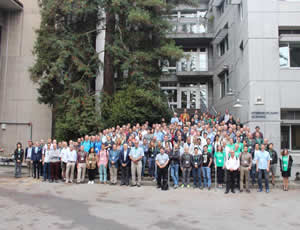
 Congratulations to SCIPP Members, Hartmut Sadrozinski(UCSC), Abraham Seiden (UCSC), and Nicolo Cartiglia (INFN Torino), awarded US Patent No. 9,613,993 B2, granted Apr. 4, 2017 for "Segmented AC-coupled readout from continuous collection electrodes in semiconductor sensors"!
 SCIPP Member, Professor and Physics Department Chair Robert Johnson, in the news with the pCT (Proton Computed Tomography/proton CT) Project!
  The Large Hadron Collider at CERN has restarted after its Extended Year-End Shutdown. The ATLAS experiment captured first collisions on May 23.
 SCIPP Member and Physicist Anthony Aguirre to be honored for his appointment as endowed chair in physics of information!
  December 2016: Just announced! SCIPP Member and Distinguished Professor, Joel Primack, has been elected as President-elect of Sigma Xi. Congratulations Joel!
 November 2016: Article published this morning on the Symmetry Magazine website, entitled, "Q&A: What more can we learn about the
  October 2016: Alan Litke (SCIPP) and David Feldheim (MCD Biology) have been awarded an NIH grant for interdisciplinary neuroscience research using their novel, comprehensive measurements of visually-evoked brain activity. The bulk of the credit for the experimental work goes to SCIPP postdoc Shinya Ito, with important technical contributions from Forest Martinez-McKinney and Serguei Kachiguine.
 October 2016: SCIPP Member, Howard Haber wins Sakurai Prize for Theoretical Physics
 August 2016: SCIPP Members, Jason Nielsen, Peyton Rose, and Jacob Pasner, have had their work with ATLAS Higgs analysis make an appearance in this Physics Briefing article.
 August 2016: SCIPP Member, Regina Caputo, interviewed for phys.org article, "NASA's Fermi mission expands its search for dark matter"
 July 2016: SCIPP physicist and founding director Abe Seiden has been awarded the Lifetime Achievement Award by the US ATLAS Collaboration. The award, which recognizes outstanding service to ATLAS and/or US ATLAS sustained over many years, was announced on June 27 at the ATLAS Week meeting in New York City.
  June 2016: Kfir Dolev, an undergraduate researcher at SCIPP, wins prestigious Goldwater Scholarship.
 May 2016: The May edition of the CERN courier has the updated ATLAS root s plot with our new W,Z@13TeV results! SCIPP contributors are Graduate Student Alexander Law, Postdoctoral Researcher Chiara Debenedetti, and Professor Jason Nielsen.


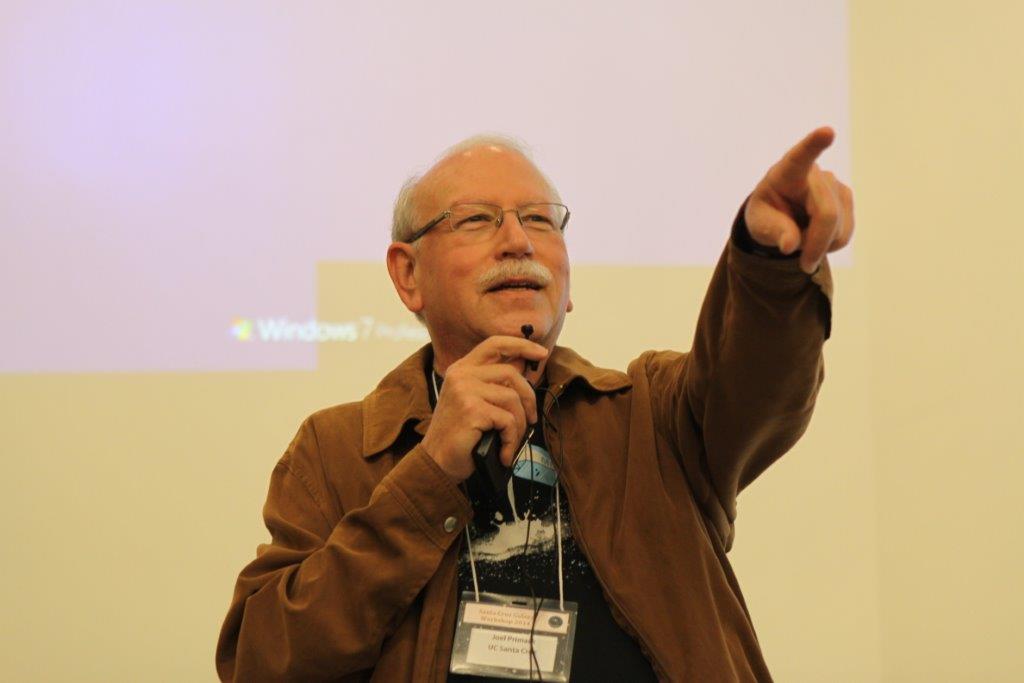


 April 2015: SCIPPers, Abraham Seiden, Howard Haber, Jason Nielsen, and Stefano Profumo
 SCIPP Reunion and 35th Anniversary Celebration,
 March 2015: HAWC to be inaugurated this week! U.S., Mexico to inaugurate facility to detect gamma rays, probe universe's most energetic phenomena!
 March 6, 2015: Higgs boson a la carte? Check out the article in Fermilab Today that reports on Professor Howard Haber's recent paper with Marcela Carena, Ian Low, Nausheen Shah and Carlos Wagner that was published last month in

 December 2014: SCIPP Member David M. Smith quoted in BBC article about NuSTAR.
 October 2014: SCIPP Member William Atwood invited to give the Manne Siegbahn Memorial Lecture in Stockholm, Sweden for his work on the Fermi-LAT Satellite program. At the lecture on October 16, 2014 he was presented with the Manne Siegbahn Medal honoring for recent break throughs and developments in experimental physics. The sponsor is the Royal Swedish Academy of Science through its Nobel Institute for Physics. Last year the award went to Joseph Incandela and Fabiola Gianotti, spokespersons for CMS and ATLAS honoring the discovery of the Higgs Boson. (
 August 2014: SCIPP Member Michael Dine is quoted in an article in Quanta magazine "At Multiverse Impasse, a New Theory of Scale Mass and length may not be fundamental properties of nature, according to new ideas bubbling out of the multiverse."
 July 2014: SCIPP QuarkNet Summer High School Students give their sample research data presentations to faculty!
  July 2014: SCIPP Director Steve Ritz testified this morning before the House of Representatives Committee on Science, Space and Technology, Subcommittee on Energy. The hearing was titled "A Review of the P5: The U.S. Vision for Particle Physics After Discovery of the Higgs Boson".
 March 2014: SCIPP will be hosting a Special Screening of the film Particle Fever including Q&A with SCIPPers Alex Grillo, Howard Haber, Jason Nielsen, Stefano Profumo, Ryan Reece, and Sheena Schier at
 February 2014: The 48th Annual Faculty Research Lecture will be given by Distinguished Professors of Physics, and SCIPPers, Howard Haber and Abraham Seiden, on Tuesday February 11th, 2014 at 7pm in the Music Recital hall of the Performing Arts Complex. A reception in the lobby will immediately follow the lecture. Doors open at 6:30pm. This event is free and open to the public.
  January 23, 2014: Congrats to SCIPPer Piero Madau on the 2014 Heineman Prize!
 December 25, 2013: SCIPP Higgs research included as part of the UCSC 2013 highlights in the Good Times article!
 December 3, 2013: SCIPP Member, Enrico Ramirez-Ruiz, supercomputer lab for undergrads
 November 22, 2013: SCIPP Research Collaboration project, HAWC/High-Altitude Water Cherenkov Observatory, article in nature.com!
 November 2013: SCIPPer Bruce Schumm to speak at UCSC's Institute of the Arts and Sciences will present its second LASER event!
 October 18, 2013: SCIPPers Ritz and Haber quoted in article about the future of particle physics: Invigorated and unified,
 October 10, 2013: SCIPP Member and Adjunct Professor David Williams selected to lead US CTA effort.


 August 2013: SCIPP hosts the 2013 Meeting of the American Physical Society(APS)Division of Particles and Fields(DPF).
 Physicist Hitoshi Murayama to speak on 'The Quantum Universe' as the public lecturer during the SCIPP hosted DPF 2013!
 July 2013: UCSC acquires powerful new astrophysics supercomputer system. SCIPP members Joel Primack and Piero Madau highlighted.
 July 2013: LSST E-News: Steve Ritz – Managing Myriad Subtle Characteristics
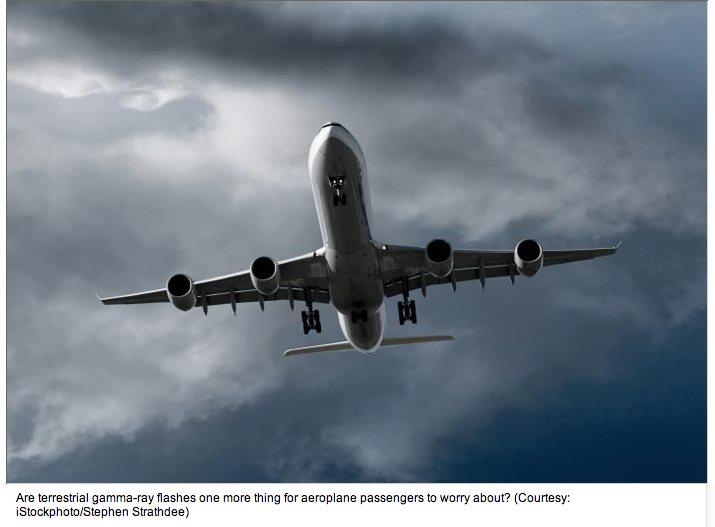

 March 2013: SCIPP Member David Smith interview with KQED,
  February 7, 2013: SCIPP Member Alexander(Sasha) Sher awarded $2.5 million NIH grant to support research on retinal disease!!
 SCIPP Member and Physics Professor Anthony Aguirre quoted in NYTimes: The Life of Pi, and Other Infinities.
  The Search for Fundamental Physics: Higgs Bosons and Supersymmetry A Symposium in Honor of Michael Dine and Howard Haber
 SCIPP Member and Physicist Tesla Jeltema honored by
  SCIPP Member and Physics Professor, Robert Johnson has been elected to Fellowship in the American Physical Society(APS) for 2013,
 November 7, 2012: SCIPP Member Abraham Seiden to speak at SWISSNEX San Francisco, "Hunting for the Higgs Boson"!
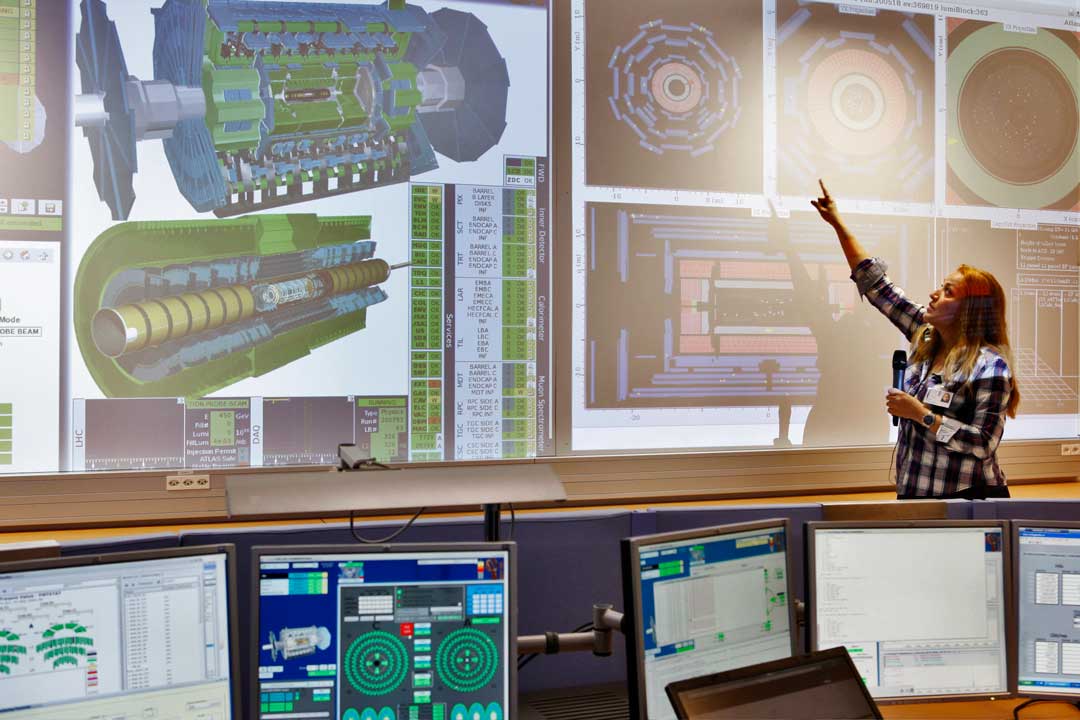
 September 18, 2012: SCIPP Member Rebecca Bernstein and the DECam team are on the SLAC front page!
 July 2012: SCIPP Member David Smith co-author of article in Scientific American: "Thunderclouds Make Gamma Rays—and Shoot Out Antimatter, Too"
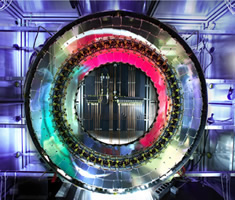 July 4, 2012: Search for Higgs boson reveals new particle!
 May 17, 2012: SCIPP Member Sasha Sher and graduate student Richard Smith co-authored paper published in Nature Photonics
 May 9, 2012: SCIPP Director and Physics Professor Steve Ritz wins Excellence in Teaching Award